
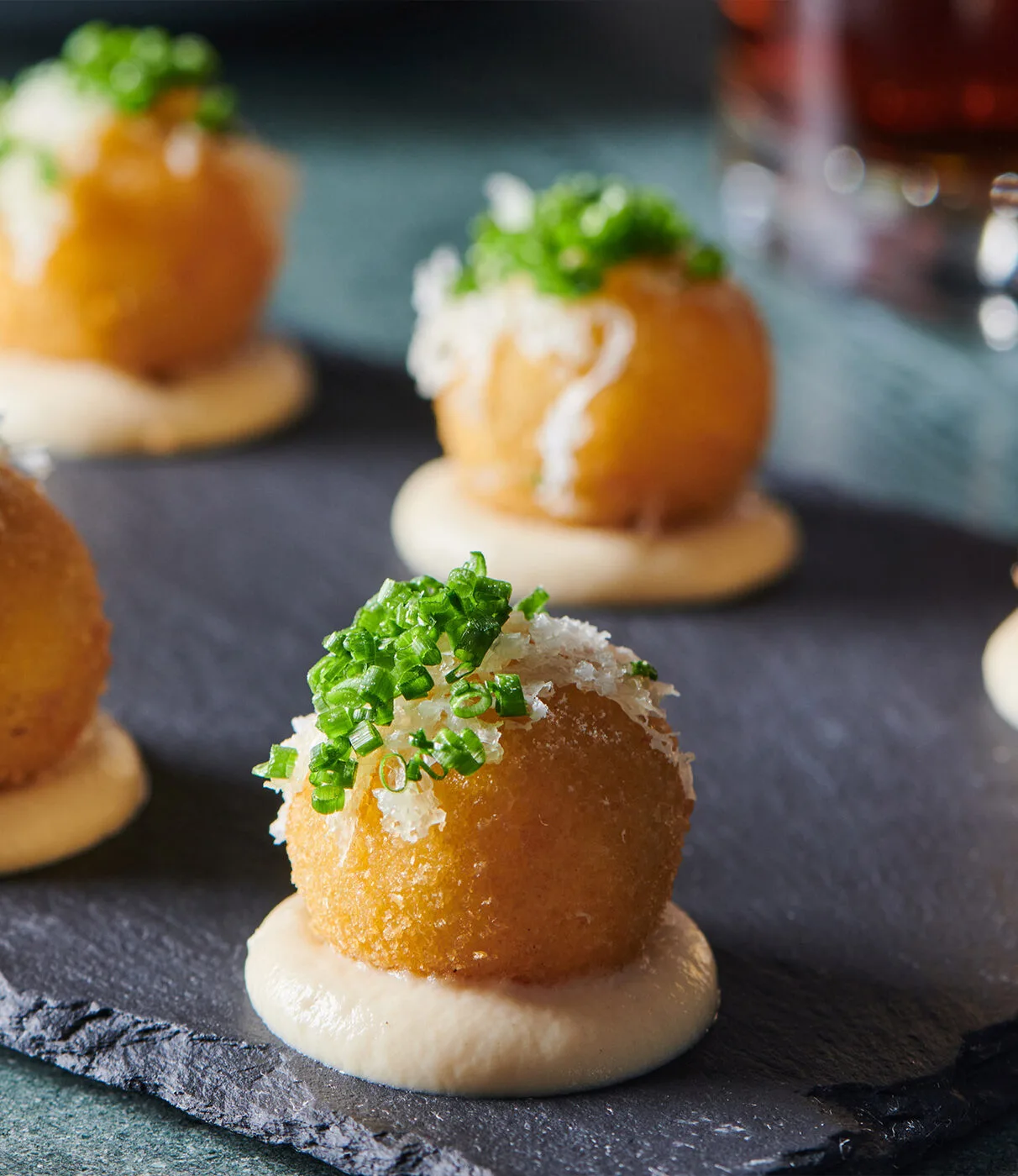
How to cater your own party
Self-catered parties rarely fail on flavour. They fail on temperature.
The food is good when it leaves the kitchen at 6:40pm and mediocre when the last guest reaches it at 7:55pm, and the gap between those two moments is the entire problem. Restaurants spend more thought on holding than on cooking, because holding is where quality actually leaks away.
If you are feeding thirty people at home, in a rented room, or in a raw event space, this is the part to plan first.
The two-hour rule
Assume your food sits for two hours. Not because you plan to serve slowly, but because you will.
Guests arrive across forty minutes. Somebody makes a toast. The person you were waiting for gets stuck on the bridge. Two hours from first plate to last is normal, and any menu that only works in the first twenty minutes is a menu that will disappoint most of the room.
This single assumption reshapes the menu. Fried things go. Anything dressed in advance goes. Delicate fish goes. What stays are braises, roasts carved to order, grains, pulses, roasted vegetables, and anything with a sauce to protect it.
What actually holds
Holds beautifully: braised meats, stews, curries, roasted root vegetables, grains, beans, baked pasta, anything saucy.
Holds acceptably: whole roasts if carved as guests arrive rather than in advance, roasted chicken, most vegetable sides.
Does not hold: anything fried, dressed salads, delicate fish, anything with a crisp element you want to stay crisp.
Plan roughly seventy percent of the menu from the first list. The pleasure of a party is not in every dish being spectacular, it is in nothing being disappointing.
Quantities
For a two to three hour party with a substantial food offering, per person:
Six to eight passed or stationed bites if there is no seated meal. Six ounces of protein if there is. Two to three sides. A bottle of wine per two people across three hours, plus non-alcoholic options that are not an afterthought, because a growing number of guests are not drinking and notice when the alternative is a jug of tap water.
Add ten percent to every number and no more. Twenty-five percent over is where money starts going in the bin.
Holding food safely, which is the real job
This is the part most people skip and the part that matters most.
Hot food needs to stay above 140F and cold food below 40F. Between those, you are in the range where bacteria multiply, and “it was probably fine” is not a standard you want to apply to your friends. The two-hour rule above is also a food safety window, not just a quality one.
Practically, holding at temperature means chafing dishes, not warming trays and not a low oven that you keep opening. Proper chafers with water pans hold service temperature for hours, which is precisely the thing a home kitchen cannot do. You also need a thermometer, because the only way to know the food is above 140F is to measure it.
Buy the pans at the same time as the chafers. The single most common self-catering failure is a set of chafers that does not fit the pans somebody bought separately, discovered at 5pm on the day.
Set the room so people can move
A single table with all the food creates one queue and one bottleneck.
Split it. Two identical stations at opposite ends of the room halve the wait and double the conversation. Put drinks somewhere entirely separate from food, because a bar next to a buffet creates a standing crowd exactly where people need to walk.
Label things. Guests with allergies should not have to find you to ask, and a legible card in front of each dish does more for the evening than another garnish.
When to hand it over
There is a point where self-catering stops saving money and starts costing an evening. It usually arrives at around forty guests, or at any event where you also have a role to play as the host, which is most of them.
At that point the maths changes. You are buying equipment you will use once, spending the day of your own party in a kitchen, and carrying the food safety responsibility yourself.
MADRE caters off-site events and hosts private dining and full buy-outs for up to 50 guests at 214 Franklin Street in Greenpoint. For larger celebrations, our sister venues Box House Events and VESPER run the whole thing with the kitchen included.
For what we are cooking this season, see the menu, or read our guide to hosting a dinner party at home if your number is smaller.
Frequently asked questions
How long can catered food safely sit out?
Two hours is the working limit, which is both a quality rule and a food safety one. Hot food must stay above 140F and cold food below 40F, and the range between is where bacteria multiply. Plan the menu on the assumption that the last guest reaches the food two hours after the first.
What food holds best for a party?
Braises, stews, curries, roasted root vegetables, grains, beans, baked pasta, and anything with a sauce to protect it. Whole roasts hold if you carve as guests arrive rather than in advance. Fried food, dressed salads and delicate fish do not hold and should be a small part of the menu at most.
How much food do you need to cater a party?
For a two to three hour party, six to eight bites per person if there is no seated meal, or six ounces of protein and two to three sides if there is. A bottle of wine per two people across three hours. Add ten percent, no more, since twenty-five percent over is where the money goes in the bin.
Do you need chafing dishes to cater your own party?
Yes, if hot food will be out for more than about half an hour. Warming trays and a low oven will not hold service temperature reliably. Proper chafers with water pans will, and you need a thermometer as well, since the only way to know food is above 140F is to measure it.
What equipment do you need to cater your own event?
The list is short and the order matters, because the failures are predictable.
Chafers first, and buy the pans at the same time. The most common self-catering failure is a set of chafers that does not fit pans bought separately, discovered at 5pm on the day. Start with the Alpha Living 4-pack stainless set or the 36QT rectangular set with seven food pans for volume, then match them with full-size hotel pans, 2.5in deep and 4in deep steam table pans for anything with depth.
A thermometer, because 140F is a number and not a feeling. The ThermoWorks Thermapen ONE is the professional standard and the Lavatools Javelin PRO does the same job for less.
For prep at volume, a Vitamix 5200 and a KitchenAid Artisan 5-quart mixer are the two appliances built for repeat use rather than occasional home cooking.
Let MADRE cater it
MADRE is a MICHELIN Guide restaurant at 214 Franklin Street in Greenpoint. We cater off-site events and host private dining and full buy-outs for up to 50 guests. Reach the events team or email info@madre.nyc.
As an Amazon Associate, MADRE earns from qualifying purchases.